Walks

Spring Wildflower Walk

Orchids, Wattle and Chocolate Lillies - best seen September through to November when the understory is in bloom.

20 min return Moderate terrain Walk Lightly audio
0.8 km
Distance
5
Audio stops
Info Centre
Start point

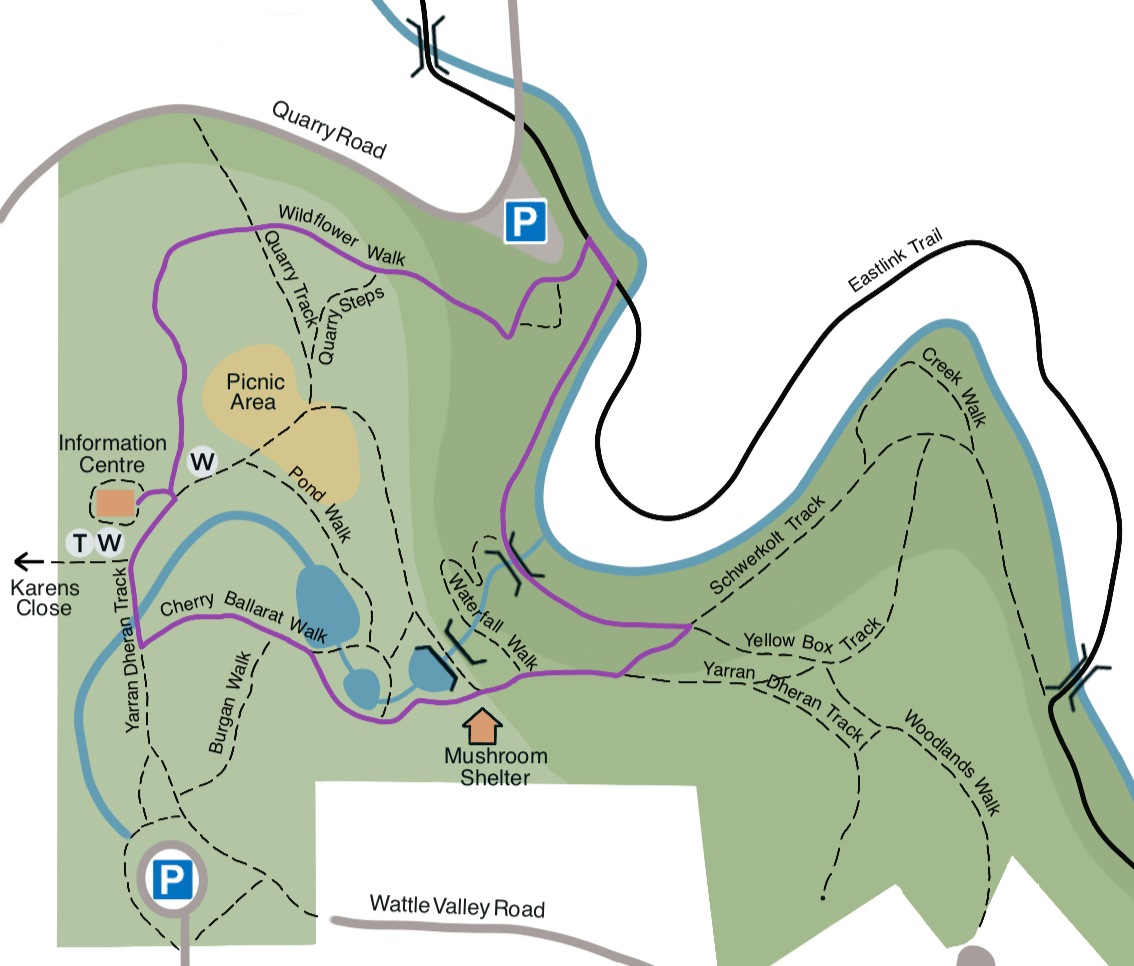
Start at the Information Centre. Follow the walk shown in PURPLE on the map. Follow the Wildflower Walk down towards the creek. Look for a profusion of wildflowers in spring, patches of Nodding Greenhood orchids, and the endemic Small Grass Tree, Xanthorrhoea minor, as well as patches of colourful spring wildflowers including Chocolate Lilies Arthropodium strictum, Milkmaids Burchardia umbellata, Blue Pincushions Brunonia australis, Love Creeper Comesperma volubile , Curling Everlasting Coronidium scorpioides and various native orchids.

Further along, look for acacia species. There are at least eight species of Acacias in Yarran Dheran ranging from Golden Wattle, A.pycnantha (Australia’s national emblem), blackwood wattle A. melanoxylon to Spreading Wattle A. genistifolia, a low growing understorey shrub with spiky leaves.

Flowering wattles are a feature of Yarran Dheran especially during late Winter and Spring.

Turn right at Yellow Box Track and walk around the ponds to return to the Information Centre.
Walk Lightly, Embrace Nature Series

Gentle, self-guided walks inviting you to slow down, notice the beauty of the Australian bush, and reconnect with nature and yourself. Along the way you’ll discover native plants, birdlife, tranquil ponds, and quiet places for reflection.

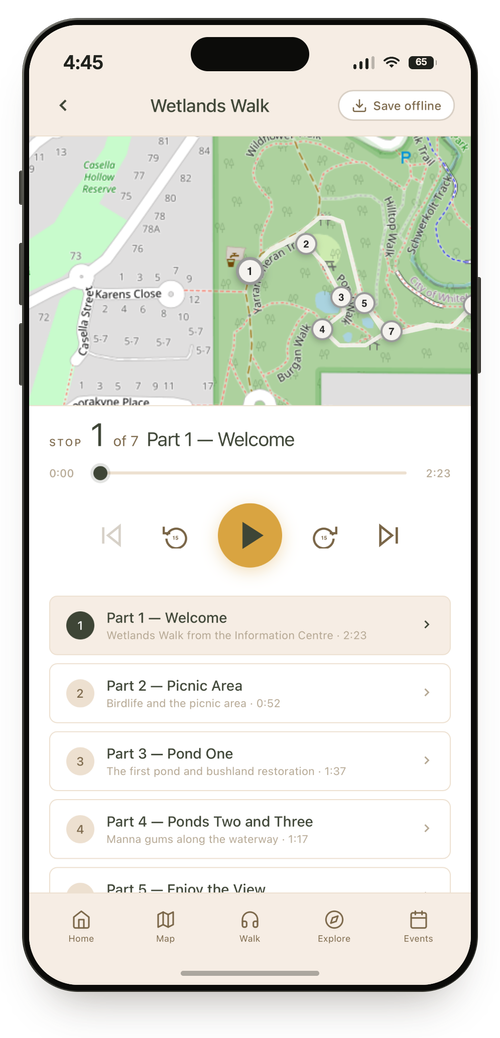
Each audio track matches a numbered point on the Spring Wildflower Walk map. Start at the starred locations and press play when you arrive.

Transcript

  • Welcome to the Walk Lightly, Embrace Nature series brought to you by the Yarran Dheran Advisory Committee. This is the Spring Wildflower Walk, beginning at the Information Centre. The full walk takes around forty-five minutes on moderate terrain, following the purple trail.

    Spring is a season of renewal and growth. As we begin, allow your curiosity to guide you. Notice the scents, the shifting light, and the soft sounds around you. The wildflowers here remind us of life’s own cycles—of change, resilience, and renewal.

    Before you set off, take a moment to settle. Breathe deeply. Notice the colours, the textures, and the scent of the fresh air. Scents are often tied to memories—allow any thoughts that arise to come and go.

    As you start walking along the purple trail, keep your pace slow and gentle. Pay attention to the small things: flashes of purple, yellow, or white among the grasses. The tiniest details are often the most extraordinary.

    Consider setting a simple intention for this walk—perhaps to notice small details, to be present, or simply to appreciate the beauty around you. Carry that intention lightly as you move forward.

    Rainer Maria Rilke wrote, “If we surrendered to earth’s intelligence we could rise up rooted, like trees.”

  • Continue slowly down the Wildflower trail towards the creek. This area bursts with wildflowers during spring. You may spot the hooded blooms of Nodding Greenhood Orchids, the tufted Small Grass Tree, soft purple Chocolate Lilies, white Milkmaids, bright blue Pincushions, delicate pink Love Creepers, cheerful yellow Curling Everlastings, and other native orchids scattered through the undergrowth.

    Pause for a moment and look closely at the plants surrounding the path. Wildflowers are humble teachers of attention; their beauty often appears only when you kneel to their level.

    Choose one plant that draws your eye. Notice its colour, its shape, its texture. Observe whether insects or birds are interacting with it.

    Zen Shin wrote, “A flower does not think of competing with the flower next to it. It just blooms.”

    Continue to Part 3 once you reach the start of Schwerkolt Track at the base of the valley.

  • Follow the Schwerkolt Track along the creek. Soon the golden blossoms of the wattles come into view, carrying a gentle sweetness on the breeze. This reserve is home to at least eight species of wattle, including the tall Blackwood Wattle, the low, spiky Spreading Wattle, and the Golden Wattle, Australia’s national floral emblem, symbolising remembrance, resilience, and reflection.

    Wattles support insects and birds, enrich the soil, and shelter smaller plants beneath them.

    Pause here and listen. Can you hear the faint hum of bees moving between flowers? This sound is a soft reminder of the interconnectedness of all living things.

    John Muir wrote, “To sit in solitude, to think in solitude with only the music of the stream and the cedar to break the flow of silence… there lies the value of wilderness.”

    Continue to Part 4 when you reach the Yellow Box Track.

  • Turn right before Yellow Box Track and walk up the Junction Steps, heading towards the Wetlands and the Information Centre. The path becomes slightly uneven here, with moderate slopes and a few steps. Tread carefully and take your time.

    Notice how the vegetation changes as you ascend from the creek. Closer to the water, plants prefer damp, cool conditions. Higher up, the woodland becomes drier, where Yellow Box trees grow with their flaky golden bark and honey-scented flowers. These blossoms attract bees and flocks of lorikeets.

    What birds can you see or hear?

    Start Part 5 when you reach the Wetlands and Mushroom Shelter.

  • When you reach the Wetlands, take a moment to pause. Listen for frogs, for birds, and for the subtle, seasonal details that are easy to miss.

    Benches near the Wetlands offer a quiet place for reflection. Julie Zickefoose once wrote, “The presence of a single bird can change everything for one who appreciates them.”

    As you make your way back to the Information Centre, return to the intention you set at the beginning of your walk. Like the wildflowers that bloom and fade each year, impermanence is part of their beauty. Take a moment to appreciate what is here, right now. Let this feeling of presence and gentle awareness move with you into the rest of your day.

    Albert Einstein once said, “Look deep into nature, and then you will understand everything better.”

    This concludes the audio narration for the Wildflower Walk. We look forward to welcoming you back again soon.